Marketing to Millennials vs. Gen Z: What Businesses Should Know
Millennials and Gen Z are often talked about together, but they do not always think, shop, or respond to brands the same way. For businesses trying to reach younger customers, employees, students, donors, or event attendees, understanding the difference can make your marketing more effective.
Millennials are generally considered the generation born between 1980 and 1994. Many of them remember life before smartphones, social media, and constant internet access became part of everyday life. They grew up during a major shift from traditional communication to digital communication.
Gen Z came after millennials and is generally considered the generation born between 1995 and 2015. This group has grown up with smartphones, social media, online shopping, and instant access to information. For many Gen Z customers, the digital world is not new technology. It is normal life.
Both generations are important for businesses, nonprofits, schools, event planners, and brands. But they respond to marketing, products, and brand messaging in different ways.
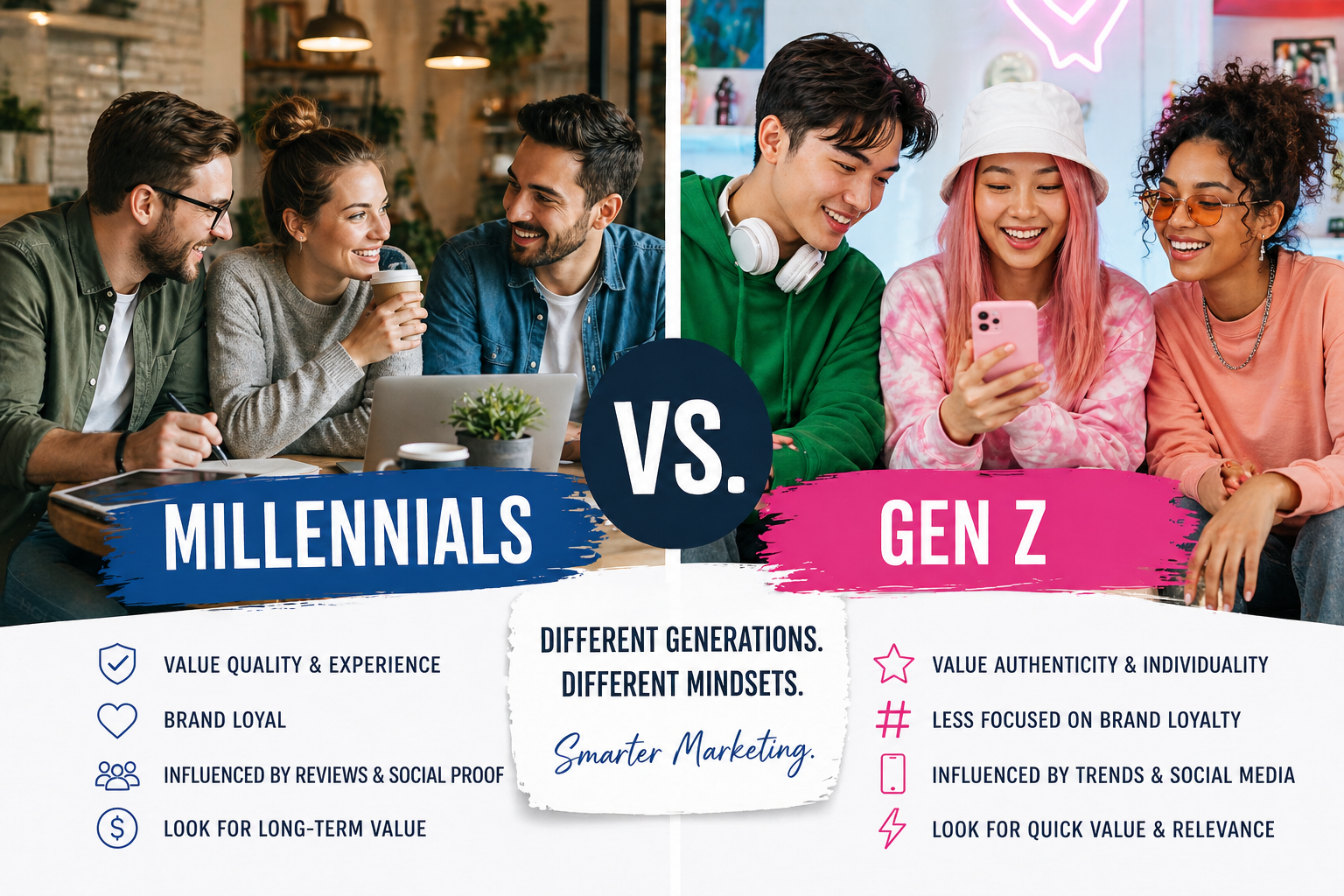 Money and Spending Habits
Millennials entered adulthood during a challenging financial season. Many dealt with student loan debt, rising housing costs, and a difficult job market during the late 2000s. Because of that, they often look for value, trust, and long-term usefulness before spending money.
At the same time, millennials are still willing to spend when they believe a product, service, or brand is worth it. They often care about quality, convenience, customer service, and whether the brand fits their lifestyle.
Gen Z tends to be more cautious and practical with money. Many grew up seeing economic uncertainty, rising costs, and financial pressure around them. Because of that, they often compare options quickly, look for honest reviews, and pay close attention to whether something feels worth the price.
For businesses, this means clear pricing, real value, and useful products matter. Whether you are selling promotional products, apparel, signage, event materials, or branded merchandise, younger buyers want to understand what they are getting and why it makes sense.
Brand Loyalty
Millennials are often more likely to become loyal to a brand when they have a good experience. If the product is reliable, the service is smooth, and the business communicates well, millennials may come back again and again.
They also pay attention to social proof. Reviews, referrals, testimonials, customer photos, and examples of completed work can help them feel more confident before buying.
Gen Z is usually less focused on traditional brand loyalty. They are more likely to move between brands based on style, price, values, trends, and personal identity. They want products that feel relevant to them, not just products with a familiar name attached.
This is especially important for custom apparel and promotional products. Gen Z buyers may care less about simply putting a logo on something and more about whether the item looks good, feels current, and says something about who they are.
Marketing Style
Millennials usually respond well to clear messaging, helpful information, good visuals, and a strong customer experience. They want to know that a business is professional, reliable, and able to deliver what it promises.
For this group, content like project examples, service pages, helpful blog posts, reviews, and before-and-after photos can work well. They want to feel like they are making a smart decision.
Gen Z responds more to content that feels real, direct, and personal. Overly polished marketing can sometimes feel less believable to them. They often connect with behind-the-scenes content, short videos, authentic photos, bold design, and messaging that feels human.
For businesses, this does not mean everything has to be trendy. It means your marketing should feel honest. Show the work. Show the process. Show real products, real people, and real results.
What This Means for Promotional Products and Branded Merchandise
When choosing promotional products for millennials, focus on usefulness, quality, and presentation. Items like drinkware, apparel, notebooks, bags, office products, and professional event materials can work well because they feel practical and polished.
When choosing promotional products for Gen Z, focus on style, identity, and shareability. Stickers, custom apparel, tote bags, pins, patches, water bottles, and creative event giveaways can work well when the design feels fresh and personal.
The product matters, but the design and message matter just as much. A simple item can perform better when it feels connected to the audience.
Final Thoughts
Millennials and Gen Z may be close in age, but they do not always respond to marketing the same way. Millennials often value trust, quality, experience, and brand reliability. Gen Z often values authenticity, individuality, style, and quick proof that something is worth their attention.
For businesses, the best approach is to avoid one-size-fits-all marketing. Think about who you are trying to reach, what they care about, and how your product or message fits into their world.
Whether you are planning custom apparel, promotional products, signage, print materials, or branded event items, understanding your audience helps you choose products that people are more likely to notice, use, and remember.